
 (281) 852-3647
 frontoffice@jdsitx.com
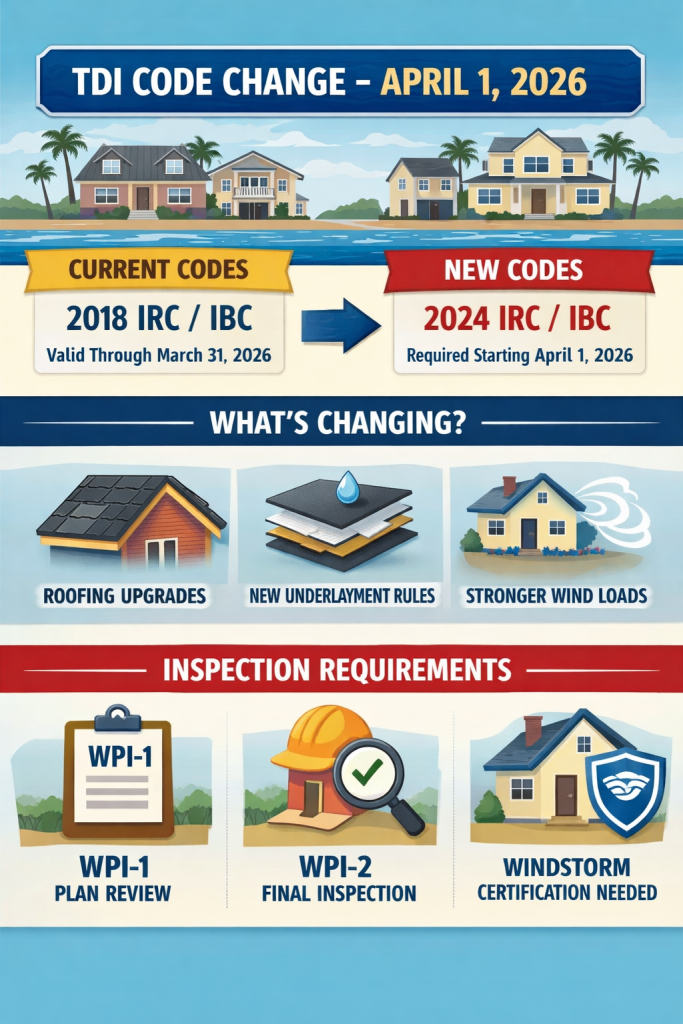
Many builders working along the Texas Gulf Coast are still discovering the changes that took effect when the Texas Department of Insurance (TDI) adopted the 2024 International Residential Code (IRC) and the 2024 International Building Code (IBC) for windstorm certification.
Although these requirements became effective for Texas Windstorm Insurance Association (TWIA) catastrophe areas on April 1, 2026, the changes extend beyond the coast. As jurisdictions throughout Texas adopt the 2024 International Codes, these same requirements will become the standard for new construction across the state.
What Changed?
While the 2024 codes include numerous technical revisions, one of the most significant updates involves roofing systems designed for high-wind regions.
The revised code places greater emphasis on the entire roof assembly—not just the roof covering itself. Builders should pay particular attention to:
- Updated roof underlayment material requirements
- Revised installation methods for underlayment systems
- Increased use of self-adhered underlayments and secondary water barriers in designated windstorm areas
- More detailed fastening requirements for roof decking and roof coverings
- Documentation requirements that may affect TDI windstorm inspections and issuance of WPI-8 Certificates of Compliance
These changes are intended to improve roof performance during hurricane-force winds while reducing water intrusion when roof coverings become damaged.
Why It Matters
For projects requiring TDI windstorm certification, compliance with the adopted code is essential. Failure to meet the required roofing standards may delay or prevent issuance of a WPI-8 Certificate of Compliance, potentially affecting a property’s eligibility for windstorm insurance coverage.
Likewise, as local jurisdictions adopt the 2024 International Codes, builders outside the designated TWIA catastrophe areas should expect these roofing provisions to become part of their local permitting and inspection process.
Understanding these requirements before construction begins helps minimize change orders, inspection delays, and costly corrections.
How JDSI Assists Builders
JDSI has extensive experience providing structural engineering and windstorm inspection services throughout the Texas Gulf Coast. Our team works directly with builders, contractors, and property owners to help projects remain compliant from design through final inspection.
Our services include:
- Structural engineering for residential and light commercial construction
- TDI Windstorm (WPI-8) inspections
- Review of roofing assemblies for windstorm compliance
- Engineering guidance for high-wind construction
- Coordination with builders during construction to address code-related questions
Additional Resources
To help our clients understand the new requirements, JDSI has prepared a summary highlighting the roofing provisions that most commonly affect residential construction in Texas windstorm areas.
If you’re planning a project in a coastal county—or in any jurisdiction adopting the 2024 International Codes—we encourage you to become familiar with these requirements before construction begins.
If you have questions about windstorm certification, roofing requirements, or structural engineering for your next project, our team is always happy to help.